Recycling and Sustainability for Gardener Chislehurst
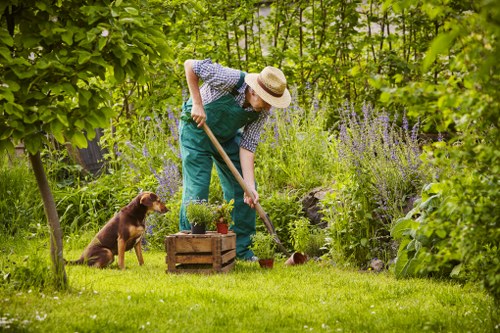 Gardener Chislehurst is committed to creating an eco-friendly waste disposal area and a sustainable rubbish gardening area that serves local homeowners and community green spaces. Our approach blends practical garden clearance with progressive recycling targets and low-carbon operations. Whether you are a Chislehurst gardener, a resident with pruning waste, or a landlord managing communal beds, our sustainability plan focuses on reducing landfill, increasing reuse and supporting the borough's overall waste strategy.
Our sustainability policy sets a clear recycling percentage target. We aim for a 70% recycling and reuse rate on all garden and green waste by 2029, with incremental milestones: 55% by the end of year one and 65% within two years. This ambitious but realistic target drives decisions about how waste is collected, processed and diverted to reuse or composting facilities, and it makes the Gardener Chislehurst service a local leader in green waste reduction.
 In alignment with the borough's approach to waste separation, we operate with clear sorting at source. The London Borough of Bromley and neighbouring boroughs often use a combination of co-mingled recycling for cans, plastics and paper, with separate garden waste collections for woody materials; Gardener Chislehurst mirrors that system in our collections. This reduces contamination, increases recovery rates and ensures that organic material is routed to appropriate composting or anaerobic digestion facilities for high-quality soil outputs.
We maintain partnerships with local transfer stations and civic amenity sites so that materials from garden clearances are processed quickly and responsibly. We make frequent use of nearby household waste recycling centres and borough transfer stations, ensuring green waste and inert materials are segregated on arrival. By coordinating with these hubs we can reduce vehicle waiting times and improve throughput, keeping the eco-friendly waste disposal area operating efficiently for all clients.
Gardener Chislehurst works closely with charities and community reuse organisations to give items a second life. Rather than disposing of usable planters, tools or salvageable timber, we identify items for donation to local reuse charities and community projects. Our partnerships with local food banks, community gardens and social enterprises ensure that surplus materials are repurposed, supporting neighbourhood sustainability and social value while reducing waste sent to landfill.
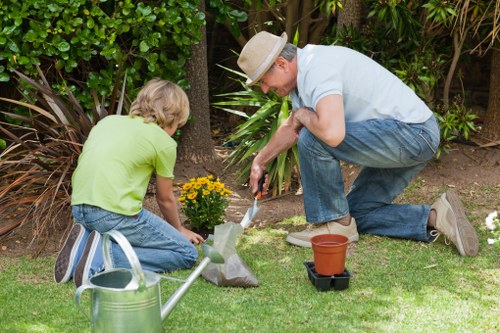 We also promote home composting and community compost hubs to extend the lifecycle of garden waste. Small-scale composting, bokashi systems for kitchen scraps and neighbourhood compost bays reduce transport and processing needs and produce valuable soil conditioners for flower beds and allotments. Gardener Chislehurst provides guidance on creating and using compost, helping households and small businesses contribute toward the sustainable rubbish gardening area vision.
Transport is a critical part of cutting carbon emissions. Our fleet modernisation plan includes a switch to low-carbon vans and electric-assisted cargo bikes for short trips around Chislehurst and neighbouring wards. These vehicles lower emissions on collection routes and keep noise pollution down in residential streets. We monitor route efficiency and payload optimisation to reduce mileage and maximise the environmental benefits of every run.
Operationally, we separate loads into distinct streams: green/organic, inert (soil, stones), wood and salvageable items. This structured sorting enables higher recovery rates at transfer stations and reduces cross-contamination. Key recycling activities relevant to the area include chipping and mulching woody waste for local landscaping projects, segregating soil for reuse in raised beds, and consolidating recyclable packaging into borough recycling collections where permitted.
To support circular economy objectives, our service also facilitates material exchanges among local gardeners, landscapers and community groups. We maintain a schedule of available mulch, compost and reclaimed timber so that resources circulate within the community. This practice helps Gardener Chislehurst achieve its recycling percentage target while fostering local resilience and reducing demand for virgin materials.
Policy, Performance and Community Benefits
Policies are published internally and shared with clients so every clearance follows a documented path from collection to final processing. We audit divertible material and publish quarterly progress against our 70% target. Our sustainability commitments include annual reviews of fleet emissions, partnership outcomes with charities and transfer stations, and community engagement metrics.
Performance is measured not only by weight diverted but also by social and environmental impact. We track donations to charities, compost volumes returned to community gardens, and the reduction in vehicle emissions due to our low-carbon vans. These metrics show how a small, local Gardener Chislehurst operation can multiply its influence across the borough’s waste system.
How Neighbourhoods Benefit
Residents and businesses benefit from reduced disposal costs, improved soil health from returned compost, and lower local emissions. We also provide seasonal programmes to clear leaf litter and woody debris responsibly, turning potential waste into mulch for playgrounds and public planters. By aligning our service with the borough's recycling schemes and transfer station capacities, Gardener Chislehurst adds resilience to Chislehurst’s green infrastructure.
In summary, Gardener Chislehurst combines practical gardening services with a clear sustainability agenda: ambitious recycling percentage targets, co-operation with local transfer stations, active partnerships with charities, and a transition to low-carbon vans. Our goal is a visible, measurable shift toward an eco-friendly waste disposal area and a thriving sustainable rubbish gardening area that benefits the whole community.